Quick answer: A child may need a tooth extraction when a tooth is too damaged by decay or infection to repair, when it has been badly broken in an injury, when a baby tooth will not come out and blocks the permanent tooth, or when the dentist needs to make room for orthodontic treatment. Most kids tooth extractions are simple, the area is fully numbed first, and children usually feel back to normal within a day or two.
Hearing that your child may need a tooth pulled can be unsettling. The good news: pediatric tooth extractions are common, usually quick, and dentists only recommend them when saving the tooth is not the better option.
Only a dental exam, often with an X-ray, can confirm whether a tooth needs to come out. Some teeth that look badly damaged can still be saved.
Often, yes. Before recommending an extraction, the dentist will look at whether the tooth can be repaired with a filling, protected with a crown, or treated with pulp therapy when decay has reached the nerve. Baby teeth matter: they help kids chew and speak and hold space for permanent teeth, which is why dentists try to keep them when it is safe to do so.
Call your dentist if bleeding does not slow after a few hours, pain increases after two days, or your child develops a fever or spreading swelling.
If a baby tooth comes out long before the permanent tooth is ready, nearby teeth can drift into the space and cause crowding later. Your dentist may recommend a space maintainer to hold the room. For older children, spacing and bite concerns can also be reviewed at an early orthodontic evaluation.
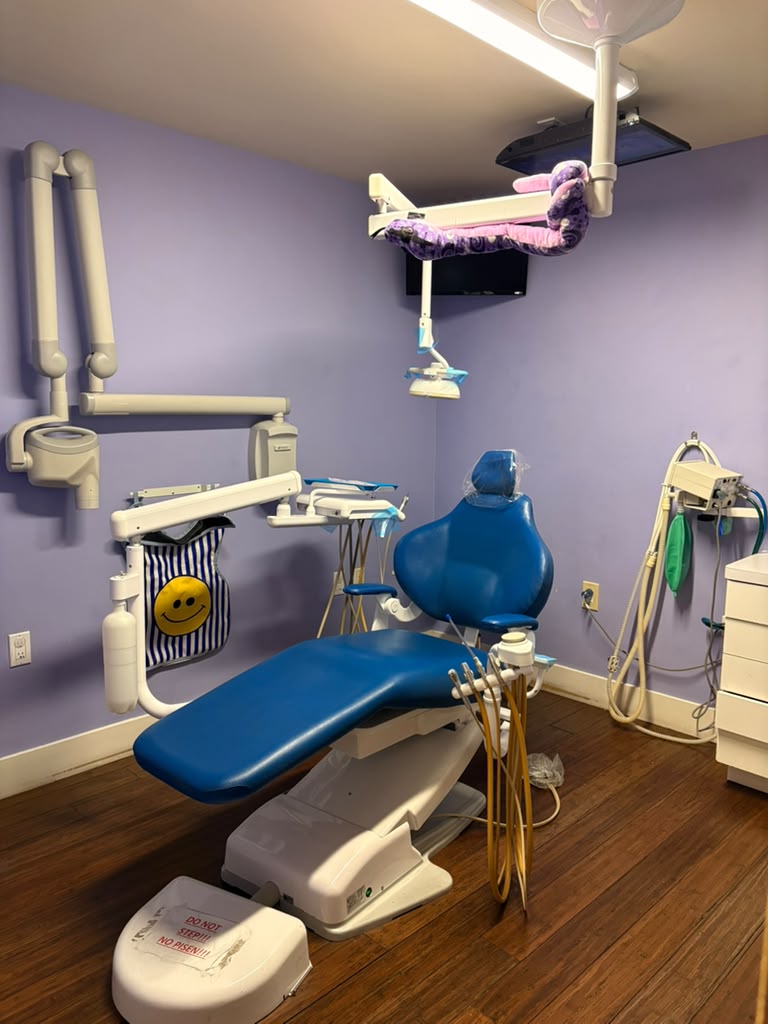
Keep your explanation short and calm: the dentist will make the tooth sleepy and then wiggle it out. Avoid words like hurt, pull, or needle. Our themed rooms, ceiling movies, and video games help many kids relax, and our team explains each step as it happens. For more, read how to help a child who is scared of the dentist.
Most extractions in children follow untreated decay, so prevention helps: brush twice daily with fluoride toothpaste, limit sugary drinks and frequent snacking, and keep regular dental checkups so cavities are caught early. Sealants and fluoride add protection, and a mouth guard helps prevent sports injuries.
There is no set age. The dentist evaluates the tooth, your child’s age, and how the permanent teeth are developing.
Most baby teeth should fall out on their own. Extraction is considered when a tooth is decayed, infected, painful, or blocking a permanent tooth.
It depends on the tooth and the treatment needed. We welcome many plans, including Medi-Cal, PPO, HMO, and union plans. Call 213-529-4010 to check your benefits.
Wait until the numbness wears off, then start with soft, cool foods. Avoid straws for 24 hours.
Have your child bite gently on clean gauze. If bleeding does not slow after a few hours, call our office at 213-529-4010.
Not usually. Your dentist will tell you if antibiotics are needed in your child’s case.
If your child has a painful, broken, or badly decayed tooth, an exam is the only way to know whether it can be saved. When a tooth does need to come out, a pediatric tooth extraction is usually quick, comfortable, and followed by a short, simple recovery.
Have questions about your child’s teeth? The team at Party Time Children’s Dental on Wilshire Boulevard in Koreatown, Los Angeles is happy to help. Call 213-529-4010 or request an appointment.
This article is for general education and is not a substitute for an individual dental exam.


Comments are closed